

Expert Guide to Choosing a Security Awareness Platform
Start With Outcomes, Not Content
When you focus on results, you can more easily evaluate whether training is actually changing behavior security awareness training platform across your client base. Look for evidence that learners can apply what they practice, not just complete modules. A platform that supports tracking and reporting makes it far easier to prove progress to clients and leadership.
Consider how the training will fit into existing workflows for MSPs, including onboarding, ticketing, and ongoing security reviews. If the program is difficult to schedule or requires heavy manual effort, it will stall and lose momentum. An expert recommendation is to choose a solution that supports automated delivery so the training stays consistent from one cycle to the next. You want a system that reduces friction for both your team and your clients while maintaining clear visibility into who completed what.
Choose AI-Powered Learning and Phishing Practice
Many organizations struggle because awareness training is disconnected from real-world threats, especially phishing. AI-powered training cyber security awareness training program can help tailor content and scenarios, aligning lessons to the types of risks your clients face. That personalization improves relevance and increases the likelihood that employees remember and apply the guidance.
Phishing awareness should also include more than generic lectures. Evaluate whether the platform can support simulated phishing and provide feedback that helps users understand why something was risky. When learners receive clear explanations after exercises, they gain concrete mental models for decision-making. For MSPs, simulations can highlight which client roles need additional coaching, turning training into a targeted improvement loop.
Make Multi-Client Management Effortless
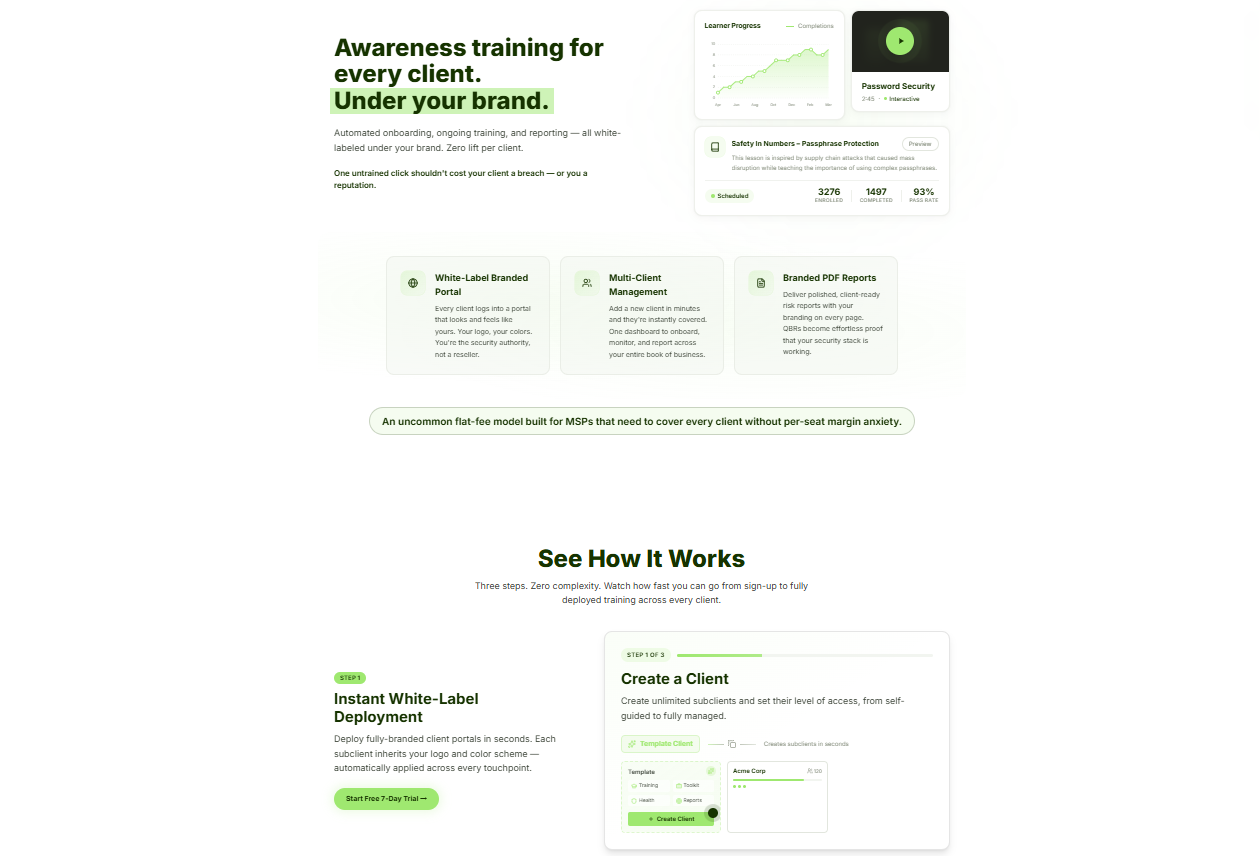
MSPs benefit when a security awareness program can be managed centrally while still addressing each client’s requirements. Multi client management should allow you to create client-specific training plans, monitor completion, and document participation without spreadsheets. If you manage dozens or hundreds of endpoints and users, manual coordination becomes a bottleneck and creates inconsistent outcomes. A platform built for MSPs should streamline administration while preserving the ability to report per organization.
Automation also matters for operational efficiency, including scheduling deliveries, managing reminders, and keeping records organized. An expert recommendation is to prioritize tooling that reduces repeat work for your security team and lowers the chance of missed assignments. Clear reporting supports accountability and makes security reviews smoother for clients. When you can quickly show engagement and improvement trends, you strengthen trust and make security services easier to sell and renew.
Conclusion
Choosing the right security training solution requires aligning features to how MSPs actually deliver services and measure outcomes. Prioritize automation, phishing practice, and centralized oversight so your clients receive consistent education with actionable follow-through. A well-designed platform turns security awareness from a periodic checklist into a continuous behavior change program. DefendWise is built to simplify that process for MSPs with AI-powered training, phishing awareness support, automated delivery, and multi client management through DefendWise.com. When you implement training with clear expectations and reporting, you create a feedback loop that improves results over time. That approach helps organizations reduce risk while building confidence in the security posture. Instead of relying on one-off sessions, aim for a system that supports ongoing reinforcement and practical learning. With DefendWise, you can standardize delivery while still adapting to the needs of each client, making your security awareness program more effective and easier to manage.