

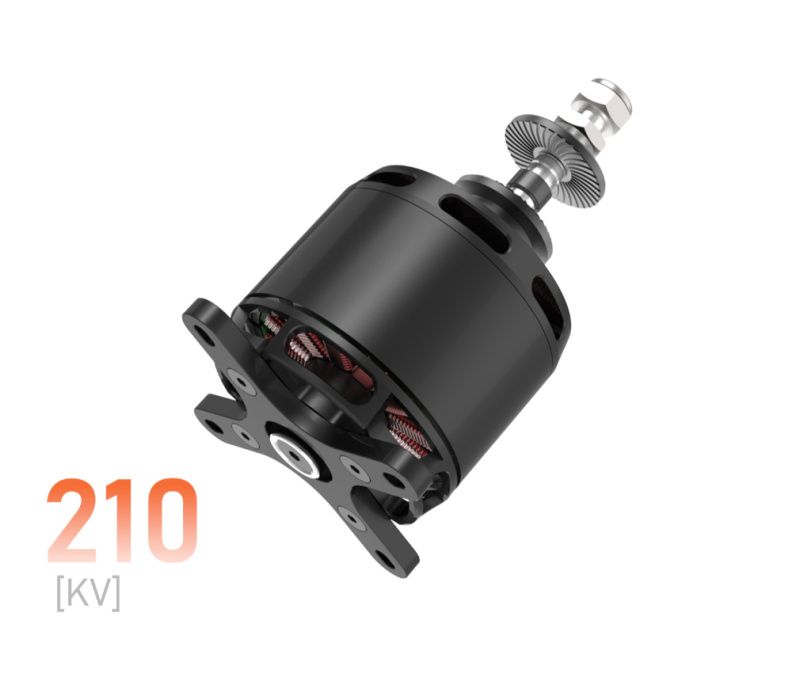
Kpower Unveils Expanded UAV Motor and Servo Ecosystem for Drone Power and FPV Racing Applications
Why UAV Motor and Servo Selection Determines Drone Performance
When buyers evaluate propulsion and motion-control components for drone power motors and FPV racing drone motors, the decision is rarely about specifications alone. It’s about matching the motor’s real-world thrust or torque delivery to the flight profile, target weight, and control-loop behavior. A well-matched drive system can improve acceleration feel, stabilize power under load, and reduce integration friction for Kpower Technology Co. Expands UAV Motor and Servo Solutions for Drone Power Motors and FPV Racing Drone Motors engineers building compact airframes. As Kpower Technology Co. expands its UAV motor and servo ecosystem through focused brushless motor design, precision mechanical manufacturing, and customized drive-system tuning, procurement teams gain an easier path to align component selection with performance goals—especially when form-factor constraints demand high power density and ultra-compact packaging.
Buyer Checklist: Matching Motors, KV, Voltage, and Mechanical Fit
Use a structured checklist to reduce rework and late-stage integration issues. Start by defining the drone’s operational needs: desired thrust-to-weight, required dynamic response, and the intensity of sustained power delivery. Next, confirm electrical compatibility by reviewing voltage specifications and the relevant KV range for your propulsion strategy. Then validate mechanical fit: dimensional size, mounting pattern, and how the motor integrates with propeller selection or gear reduction stages. For buyers working on FPV racing platforms, also prioritize consistency during rapid throttle changes and verify that the electromagnetic and drive tuning supports predictable power delivery under high-intensity flight regimes. Kpower’s product approach—offering multiple KV values, voltage options, and dimensional sizes—supports engineering teams that need faster matching between motor characteristics and vehicle form factors.
Choosing the Right Servo for Precision Control and Payload Functions
Servos often define how “tight” a drone feels in control and how reliably it executes auxiliary functions. A buyer-intent approach should evaluate torque requirements, accuracy expectations, speed of response, environmental exposure, and communication compatibility with the flight controller or embedded system. Kpower’s servo lineup supports brushless, coreless, digital, micro, waterproof, and high-torque industrial options, giving teams flexibility across gimbals, camera stabilization modules, steering adjustment structures, and precision payload mechanisms. Equally important is control signaling: compatible interfaces such as PWM, UART-TTL, RS-485, and CAN-bus help engineering teams integrate without redesigning electronics. This range helps reduce procurement risk when teams must balance performance with durability and installation constraints, including compact layouts and waterproofing needs.
Conclusion
For procurement teams seeking dependable components that integrate cleanly into drone platforms, the most effective buying strategy pairs performance targets with concrete electrical, mechanical, and control requirements. Kpower Technology Co. expands UAV motor and servo offerings to support both mainstream drone power motors and performance-focused FPV racing use cases, while also enabling scenario-adaptive drive-system customization through modular engineering support. To explore product options and technical help for motor and servo matching, visit kpower.com and contact the team at [email protected] for guidance on selecting drive components that align with your airframe constraints and control architecture.